Service 01 / 14
Web design & development
We design company websites and write their code, so the page you sign off is the page that goes live.
In short
What this covers
Most of a website’s cost hides in the design-to-code hand-off: spacing approximated, motion dropped, components rebuilt three times. We do both, designing in the browser early.
A typical project covers sitemap and templates, interface, an extensible content model and a static build at the edge. Sometimes it is one part: designs for your developers, or code for your designs.
- Usually for
- Companies with a complicated offer to explain, Teams replacing a site they can no longer edit, Studios and firms that sell on reputation
Scope
What a project usually includes
-
Structure
Sitemap, URLs and templates shaped by how your buyers decide, before visual design.
-
Interface
Type, grid, components and states as one system, reviewed as real pages.
-
Content model
Fields for services, case studies, articles and landing pages, so new pages only need writing.
-
Build
Semantic HTML, modern CSS, minimal JavaScript. Static where possible.
-
Search basics
Titles, descriptions, structured data, internal links and redirects, built in.
-
Accessibility
WCAG 2.2 AA as standard: keyboard, focus, contrast, forms and reduced motion.
Handover
What you own afterwards
- The production site and its source code
- A design system in code, documented
- A content model and a short editing guide
- A redirect map from the old URLs
- Automated checks on every build
Limits
Where this isn’t the right fit
Need a site this month? We are probably wrong for you: structure work comes first and takes time.
We don’t run large e-commerce catalogues or replace back-office systems. We build their front end with your engineers, and the smaller connections around them.
Work
Projects built with it
Products, prototypes and demo builds the studio made itself, each labelled with its status. None is client work.
-
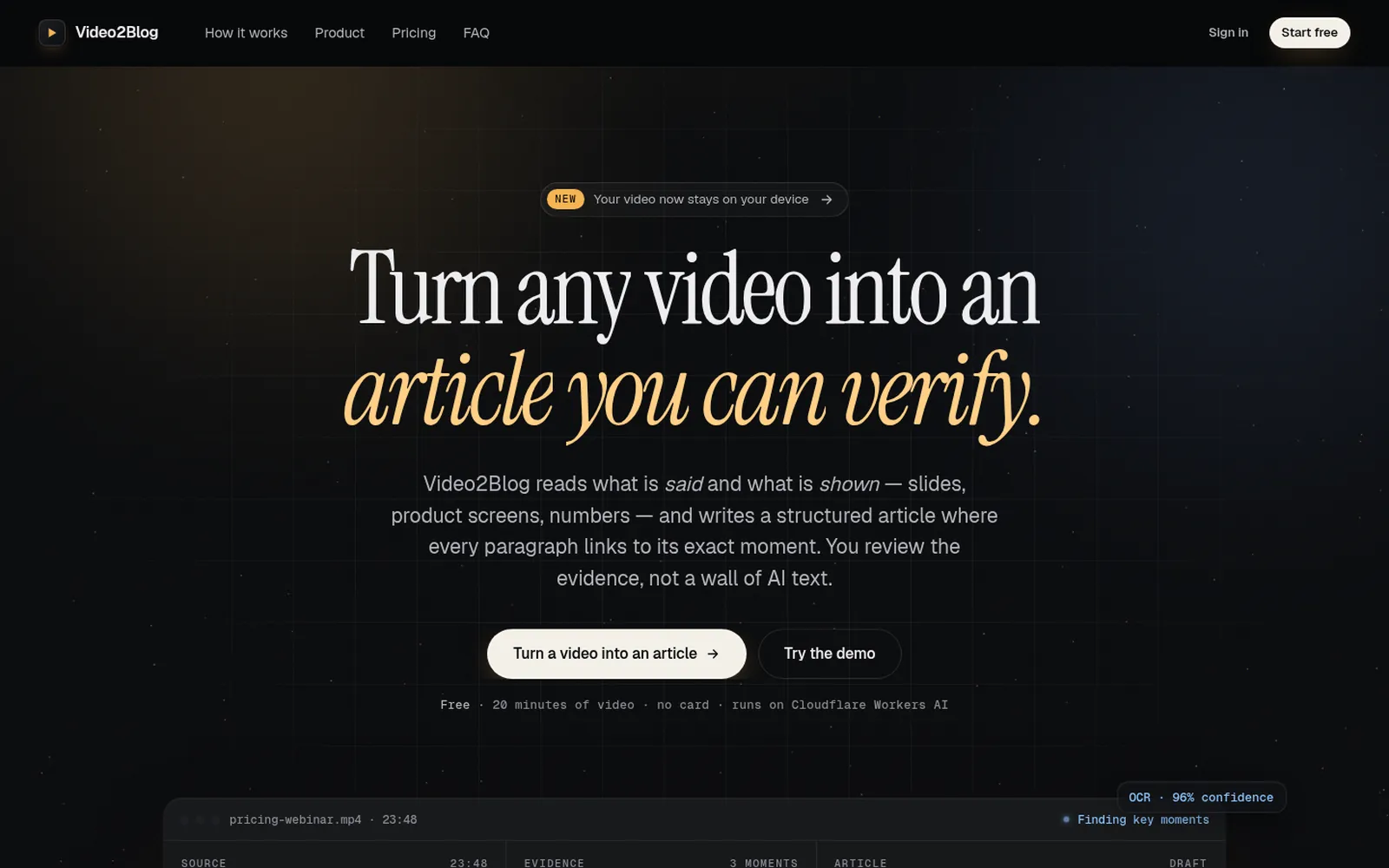
Video2Blog
A Cloudflare SaaS that turns a video into a structured article where every paragraph cites the moment in the source it came from. : Video2Blog -
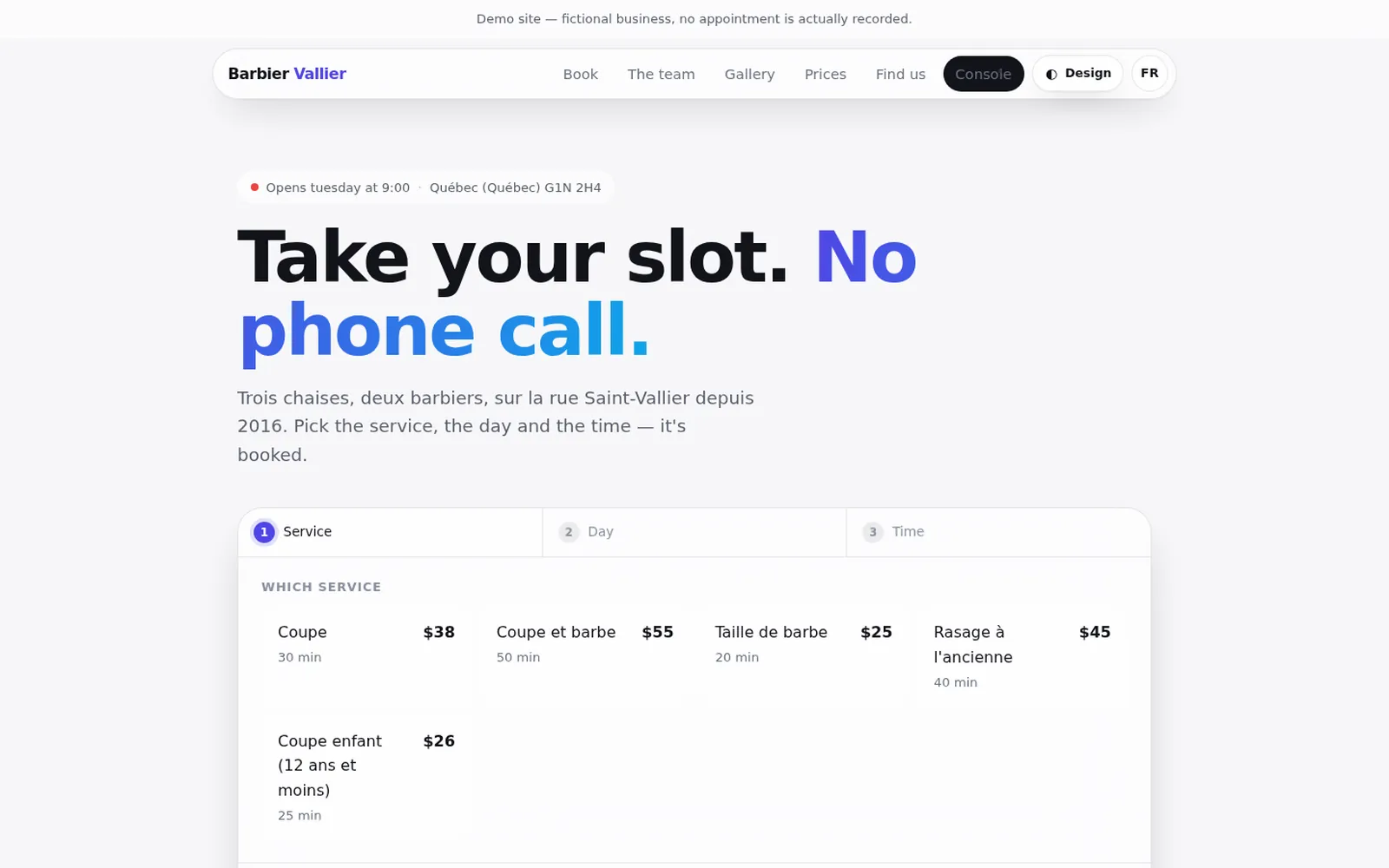
Barbershop SaaS
A multi-tenant booking and management platform for barbershops: three-step online booking for clients, and a console for the shop’s appointments, team, hours, services, payments and media. : Barbershop SaaS -
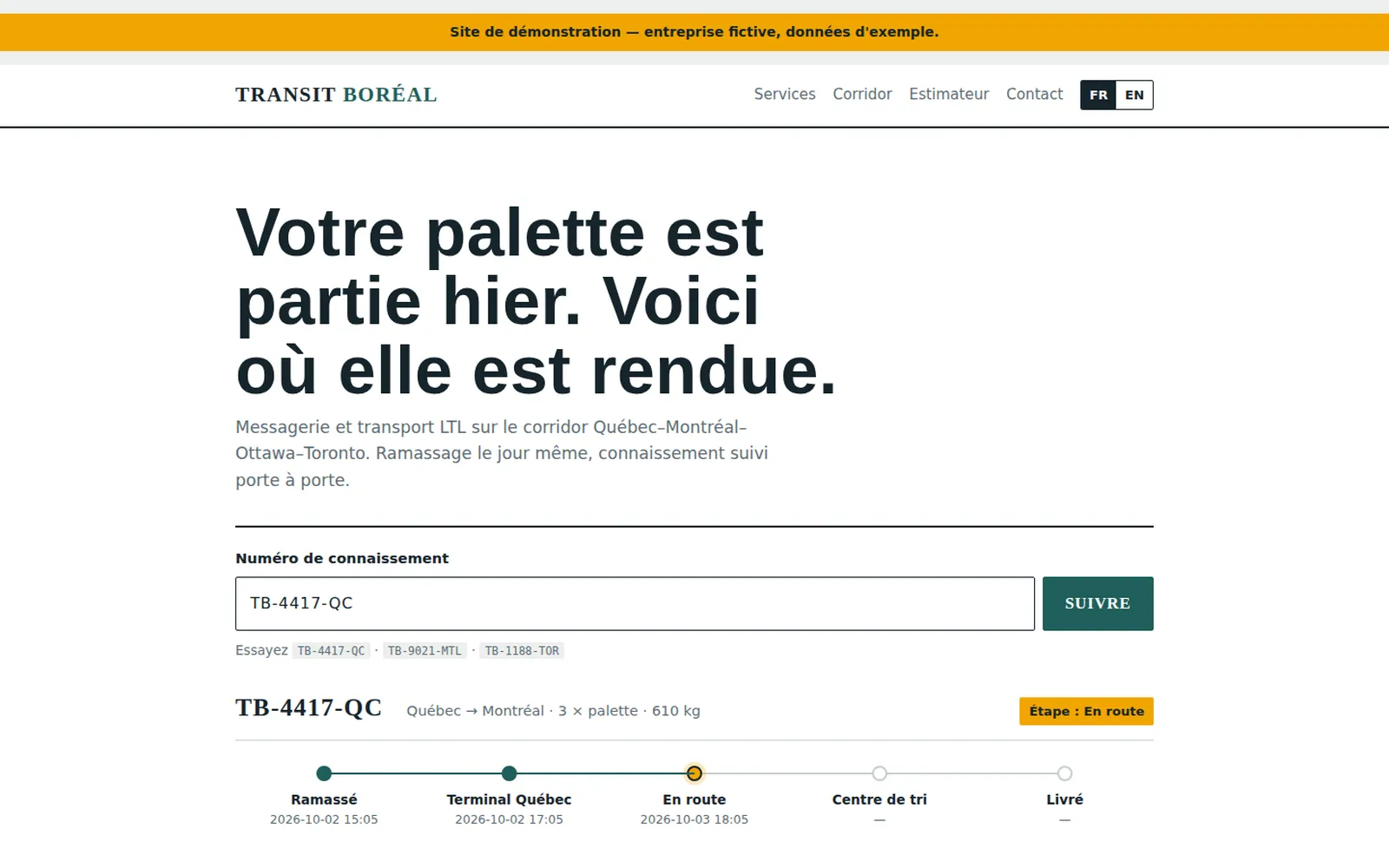
Transit Boréal
A bilingual site for a Québec–Toronto carrier with waybill tracking, a server-priced rate estimator and a staff console, on Cloudflare Pages and D1. : Transit Boréal
FAQ
Questions about this
What do you actually deliver?
Designs and working code. Depending on the project that can include the sitemap and page templates, the interface and motion design, a design system, the frontend build, WebGL scenes, CMS integration and the launch. Services has the detail.
How long does a website take?
It depends on the scope, and even more on whether the content is ready. The studio works in short cycles: AI agents take on much of the research, building and testing, and a person reviews every step, so a working version comes early and improves from there instead of arriving after months of documents.
We give a dated plan once the scope is agreed, not before, and we do not promise a date the scope cannot support.
How much does it cost?
We quote after scoping, against a written scope. There is no price list because two “websites” can differ by a factor of ten. The brief asks for a rough budget so the proposal fits it; “not sure yet” is a fine answer.
Can we edit the site ourselves?
Yes, if you need to. Some sites are best kept as content in code (this one is); others need a headless CMS. We recommend one after seeing who edits what, and how often.
Who owns the code and designs?
You do, once the project is paid for, as the contract sets out. Open-source libraries keep their own licences, which we list at handover.
Tell us what the site has to do.
Tell us what you need and by when. We read every enquiry and reply in writing, with questions, a next step, or a plain no if we’re the wrong studio.