SIMONVILSTECH / Digital studio, Québec
We build websites and the systems behind them.
For small and mid-sized businesses and product teams: the site, how customers find it, and what happens after they get in touch, built as one.
- Services
- 14
- Projects shown
- 9
- Way of working
- Agents build, people decide
Work
Built by the studio
A selection of what the studio built itself, recorded running. Each says where it stands and what is a demo; none is client work.
-
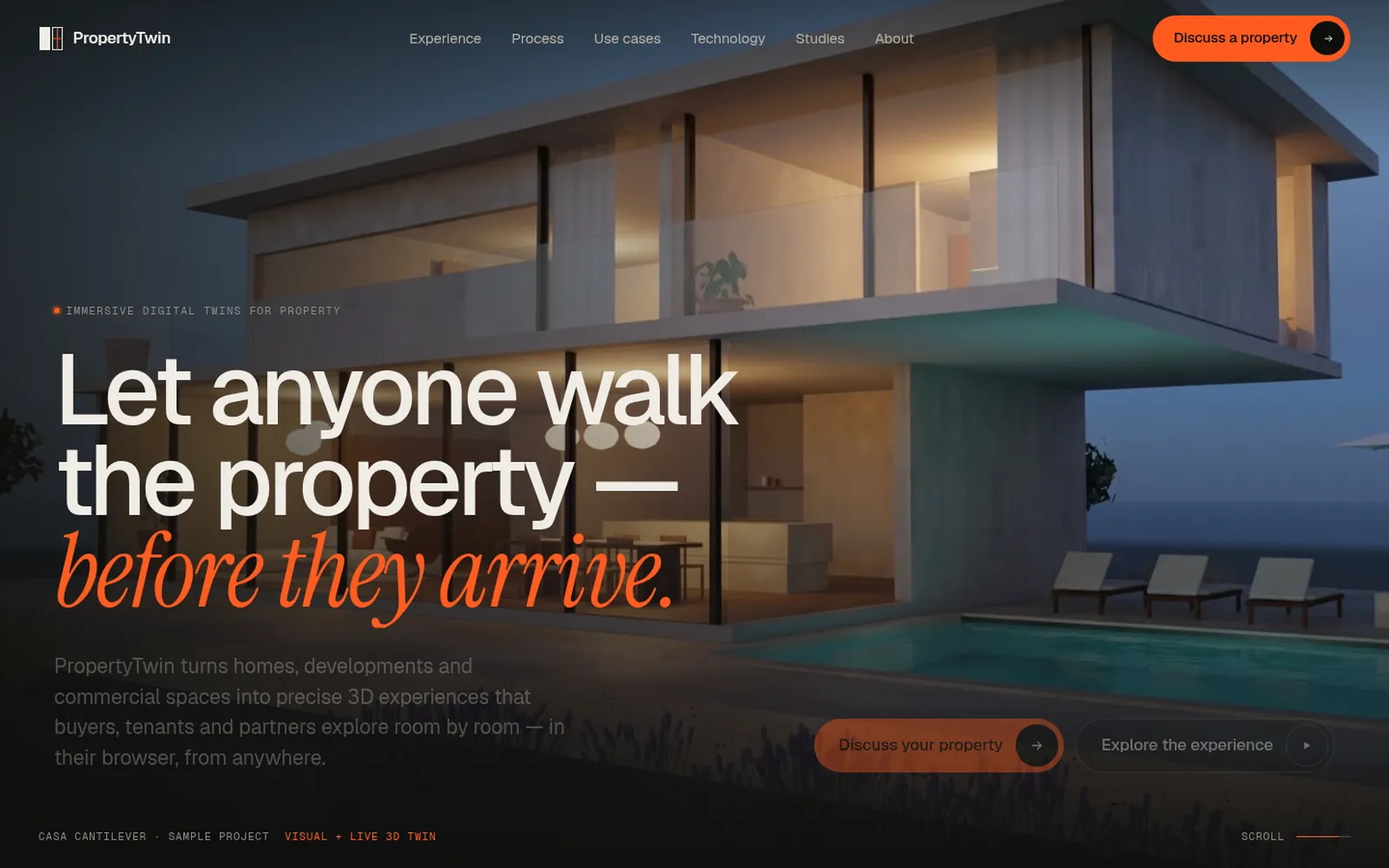 PropertyTwin
Problem Static photos and floor plans make people guess how a property feels before they visit.Built Walk a property in the browser, room by room.
-
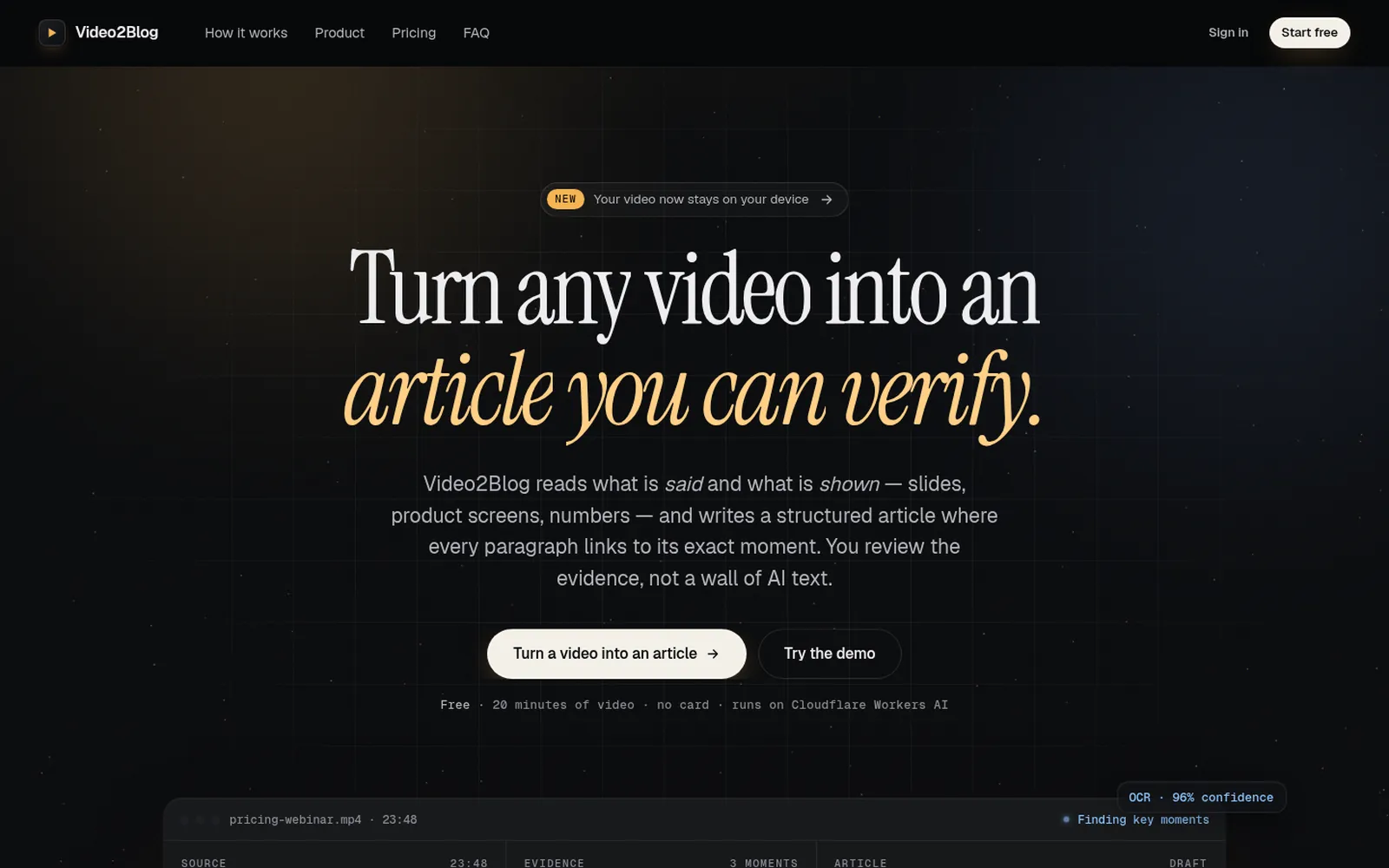 Video2Blog
Problem AI-written articles from videos are hard to trust because nobody can see where a sentence came from.Built Videos into articles you can verify.
-
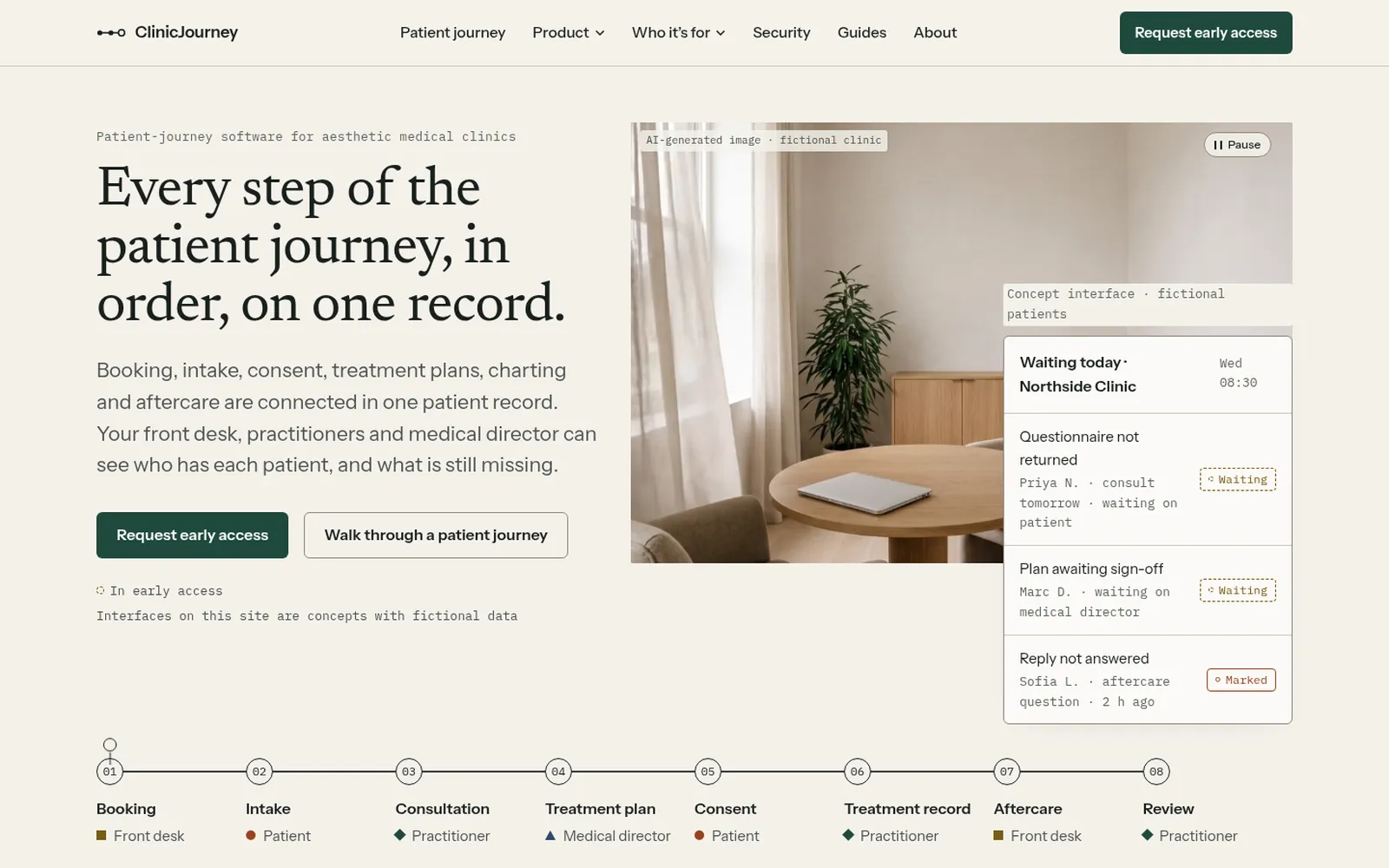 ClinicJourney
Problem Clinic software is sold with feature lists; owners need to see how a patient actually moves through the day.Built The patient journey, step by step, on one record.
-
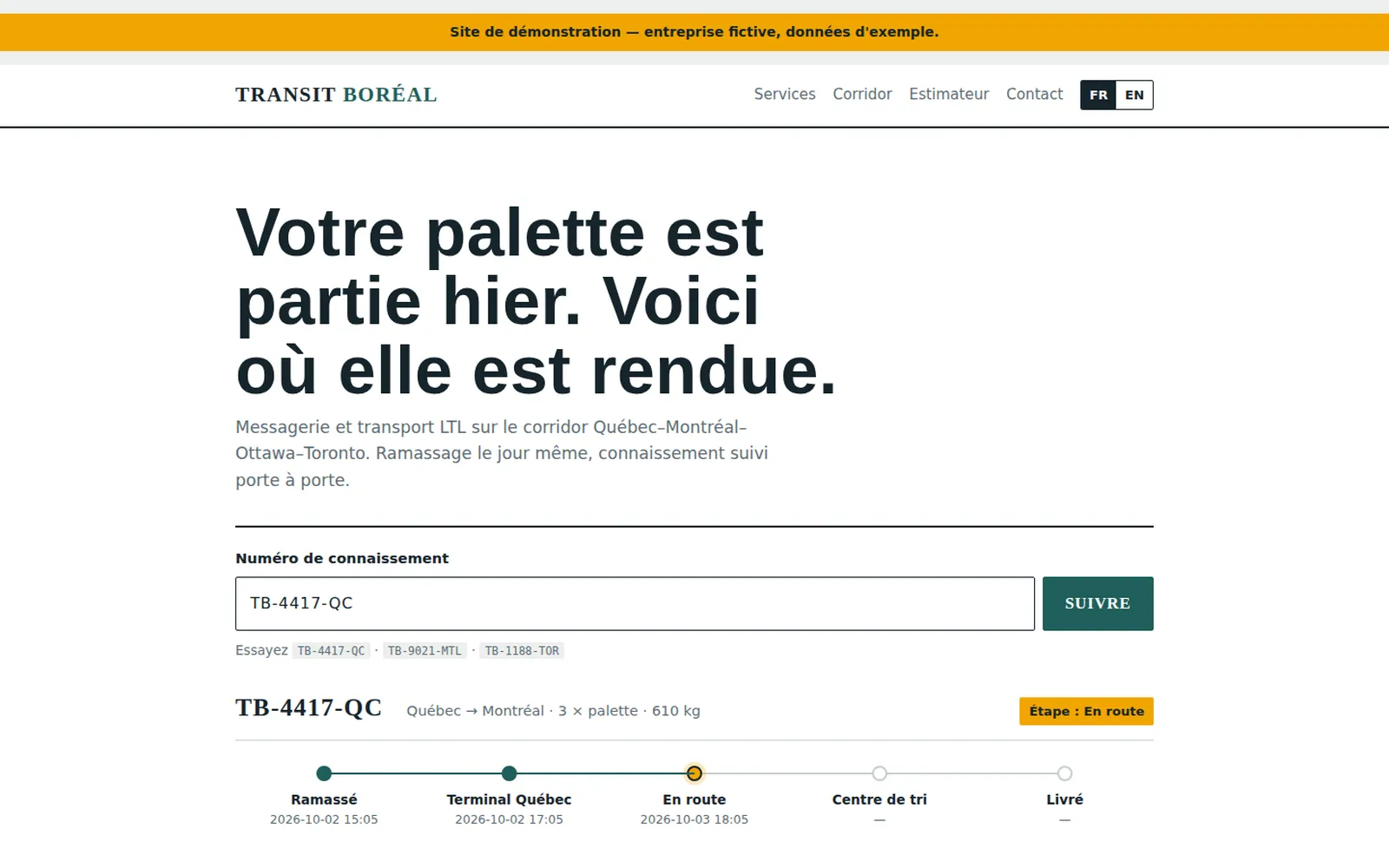 Transit Boréal
Problem A regional carrier needs customers to find a shipment and a price without calling.Built Track a pallet, price a shipment, run the register.
- All 9 projects Every project the studio has built, with its status
Seen something close to your project? Start a project
Most businesses buy their systems in pieces.
What we build
Most businesses buy their systems in pieces. A website from one agency, ads from another, a booking tool, a CRM nobody updates. None of them shares data, so people carry it between them by hand. We build the pieces as one system: the handoffs automated, a person on every exception.
01
Websites and digital experiences
The company site, its redesign, and the pages that have to show a product: designed and coded in one place.
02
Visibility and acquisition
Being found on Google, on Maps and in AI answers, and paid ads where they pay for themselves.
03
Conversion and connected systems
What happens after the click: the enquiry, the call, the booking, and the routine work between your tools.
Under the surface
The page is the surface. We build what runs underneath.
Five layers, from what a customer sees to the person who decides. Each one says how far the studio can show it today.
- 01
Interface
Websites, product pages and the screens of an internal tool: what a customer or a colleague reads, clicks and remembers.
Shown in the projects under Work
- 02
System
The rules, the data and the connections to the tools a team already uses: CRM, email, payments, spreadsheets. The form on this site is checked, delivered and kept safe by a function we wrote.
Running on this site
- 03
Automation
The routine after a click, done without retyping: requests routed, records updated, reports written, an alert when something changes or breaks.
Offered, scoped per project: automation & integrations
- 04
An AI agent, where a step needs judgement
Reading a free-text request, sorting it, drafting the reply. It works inside the workflow, with a confidence line and a log, never on its own.
In the Lab, not yet client work
- 05
A person, for every exception
Anything unclear, risky or below the confidence line goes to a named person, with the context already gathered. The routine is automated; people keep the decisions.
Built into every workflow we design
How we work
Where the agents work, and where people decide.
Faster cycles, not shortcuts. Each stage has a person at the gate.
-
Research and analysis
Agents read the current site, the data and the tools in use, and draft the findings. A person decides what matters and what to build first.
-
Prototype and build
Agents write code against an agreed design and architecture. A person sets that architecture and reviews every change before it is merged.
-
Test on every build
Automated checks run on each build: accessibility, speed, links, structured data, the journeys that matter. A person checks what a machine cannot judge.
-
Release
Nothing ships without a person’s approval. Money, contracts and anything a customer will read stay with people.
Things you can check on this site
No client logos yet, and no borrowed numbers. Each figure is measured by the build that made this page, or can be tested in your browser.
- 9projects under Work, recorded running, each with its status and what is a demo
- 131pages of static HTML. Every one reads with JavaScript turned off.
- 38.5 KBof JavaScript for the whole site, gzipped, measured at build time
- 6automated audits, plus browser tests with axe-core, run before each release
Before you get in touch
Why are there no client logos?
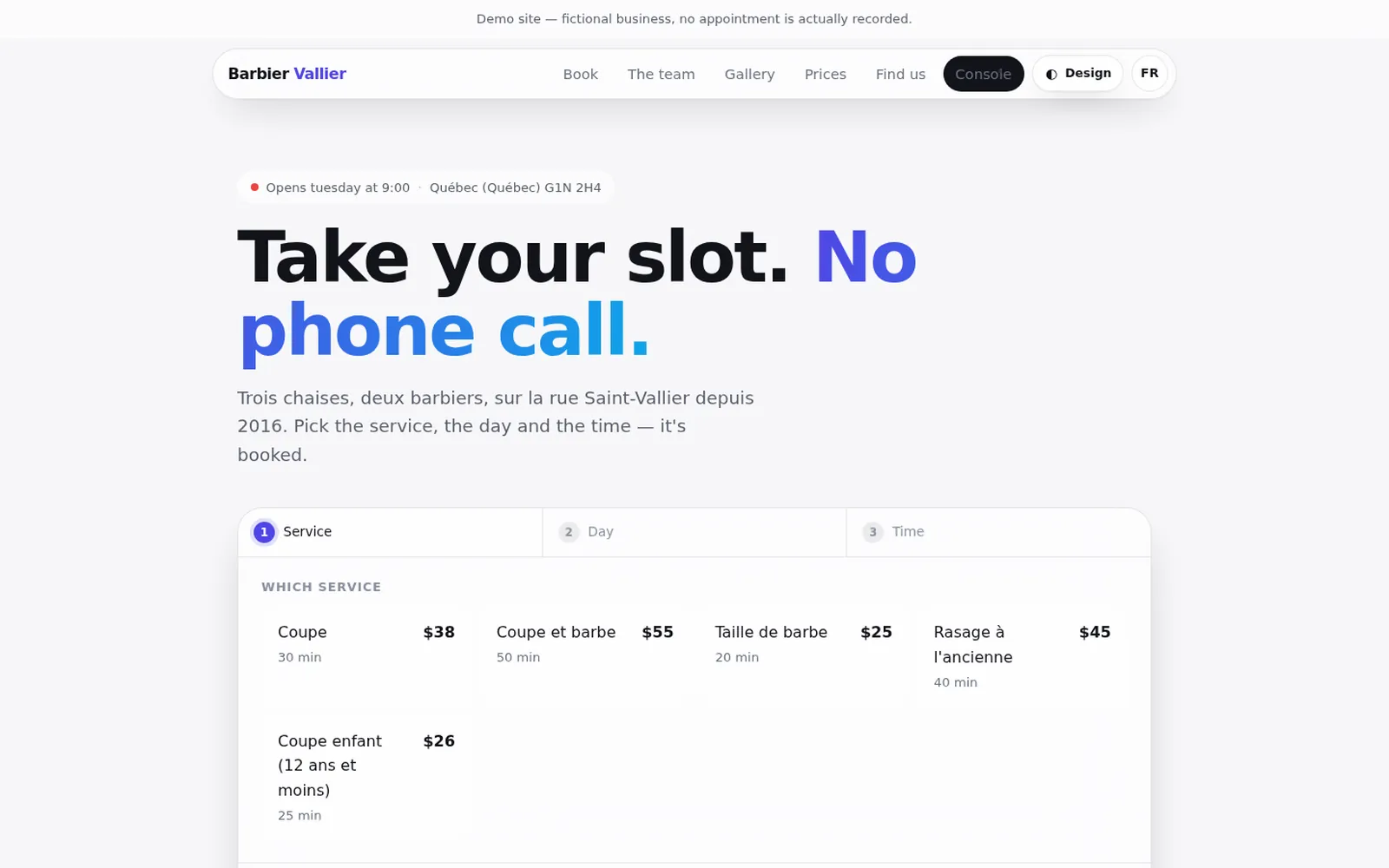
Because we haven’t published any client work yet, and we won’t imply that we have. Everything under Work was built by the studio itself: its own products, prototypes and demo builds for fictional brands. Each page gives the project’s status and says what is a demo.
The projects show how we design and build, recorded from the running code. They don’t show business results, and we don’t present them as if they did.
Do you build AI agents?
Yes, inside systems with clear limits. The AI receptionist answers calls from information you approve, review replies and content are drafted for a person to approve, and in automation a language model handles the steps that need judgement while a person reviews what it is unsure about.
None of it has run for a client yet, and we say so. A first project is a small pilot with a fixed scope.
How much does it cost?
We quote after scoping, against a written scope. There is no price list because two “websites” can differ by a factor of ten. The brief asks for a rough budget so the proposal fits it; “not sure yet” is a fine answer.
How long does a website take?
It depends on the scope, and even more on whether the content is ready. The studio works in short cycles: AI agents take on much of the research, building and testing, and a person reviews every step, so a working version comes early and improves from there instead of arriving after months of documents.
We give a dated plan once the scope is agreed, not before, and we do not promise a date the scope cannot support.
Where does the work stop moving?
Tell us what is slow, disconnected or done by hand twice. We read every request against what the studio actually builds, and reply with questions, a next step, or a plain no if we’re the wrong studio.