Solution
Product launches and interactive product stories
A launch gets one first impression. Make it with one strong idea, load fast, and show which campaign worked.
The situation
What usually goes wrong
Technical and physical products get flattened into feature lists and stock photos. Buyers learn what it has, not how it behaves or why that matters.
How we build them
One idea, one action
Launch pages fail predictably: heavy opening animation, slow first load, tracking added the night before. We reverse that: the message renders first, the signature moment follows once the page is usable, and campaign tagging ships in the first build.
Each page gets one main action and only the navigation it needs.
-
Scroll stories
Pinned or stepped explanations that follow normal scrolling.
-
Real-time 3D
Products and systems rendered live in WebGL, with a still fallback.
-
Guided demos
Self-paced walkthroughs the visitor controls.
Timeline
Working back from the date
-
01
Brief
Idea, action, audience, date.
-
02
Prototype
The signature moment tested on real phones before full design.
-
03
Build
Page, form, tracking and the reduced-motion still.
-
04
Launch
Ad links tagged, thank-you page recording conversions.
In this offer
What is included, and what is not
Included
- The launch page or interactive story, with one main action
- The signature moment (motion, real-time 3D or a live demo), prototyped on real phones first
- A still version for reduced motion, and its written specification
- Campaign tagging and a thank-you page that records conversions, in the first build
- The motion principles and tokens, for the pages that follow
Not included
- A 3D scene when a video loop or an illustration tells the idea: we will say so, it is cheaper and faster
- Heavy 3D for an audience on old phones and mobile data: a lighter effect or a still frame instead
- Buying the media: campaigns point to the page; paid acquisition is its own offer
Fit
Good launch projects, and poor ones
Worth a conversation if
- There is a launch date
- Paid campaigns will point here
- The product is easier to show than describe
Probably not if
- The offer or audience isn’t decided yet
Work
Projects close to this problem
Built by the studio itself and labelled with their status. None is client work.
-
ClinicJourney
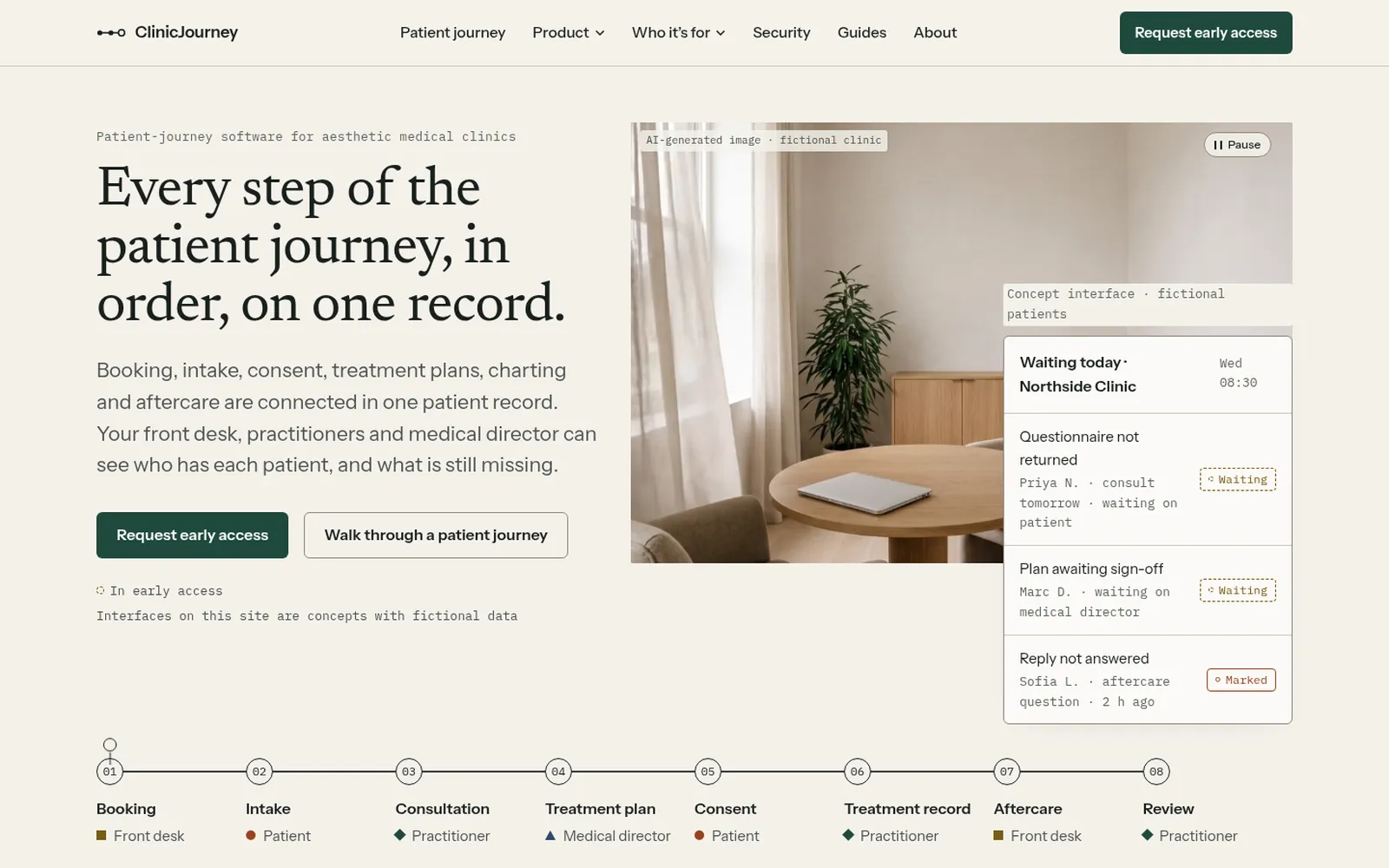
The marketing website of a pre-launch patient-journey platform for aesthetic clinics, with an interactive walkthrough of one fictional patient across eight steps. : ClinicJourney -
PropertyTwin
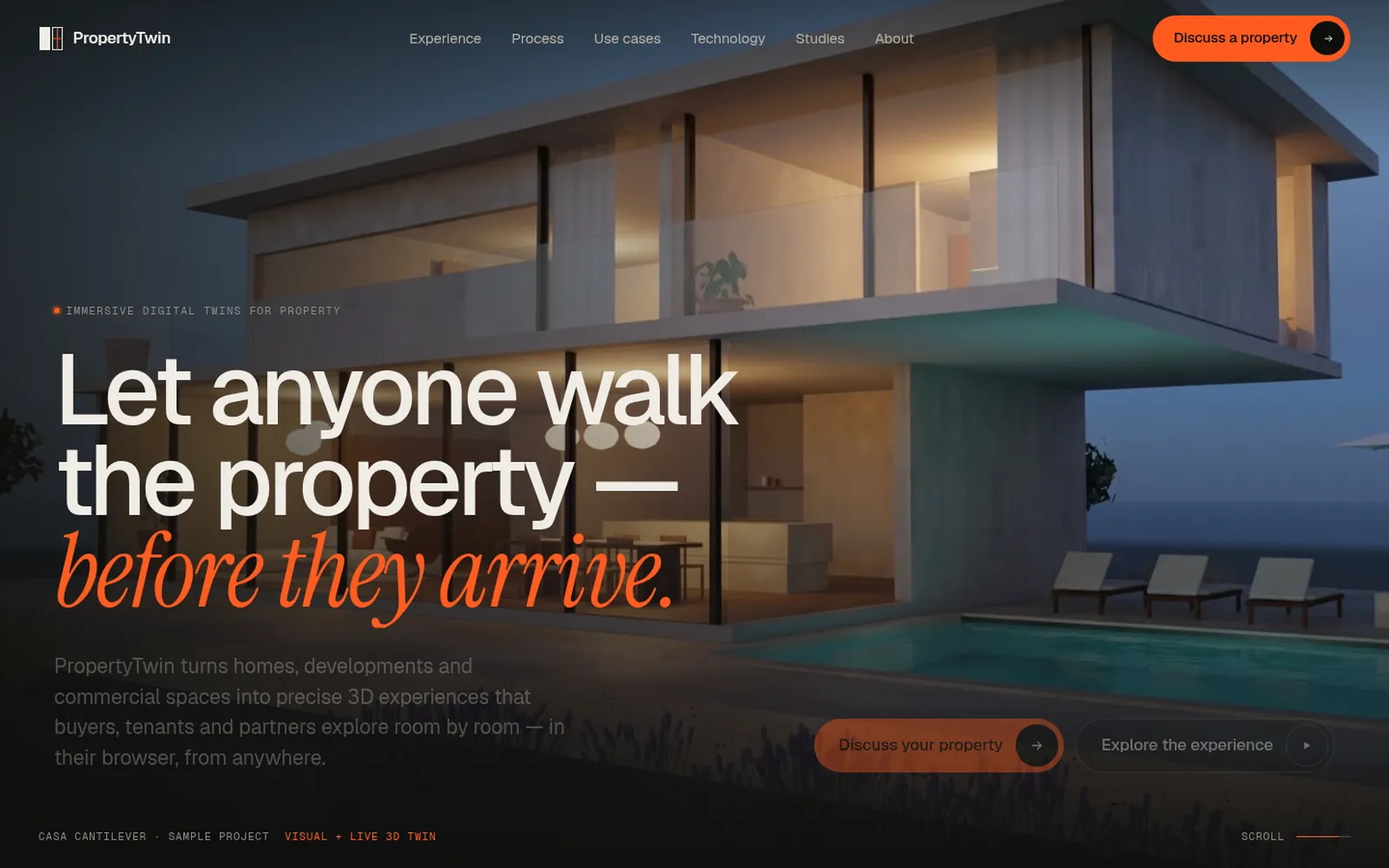
A live marketing site for a property digital-twin service, built around a 3D sample villa that visitors orbit, open room by room and relight in the browser. : PropertyTwin
Services
Services this draws on
FAQ
Questions people ask about this
We have a fixed date. Can you hit it?
Tell us the date in the brief. If the scope fits, we plan backwards from it. If it doesn’t, we’ll say what can realistically go live by then.
Won’t WebGL make the site slow?
It can, which is why it loads after the content, draws less on weaker devices, stops when it is off screen and becomes a still image for people who prefer reduced motion. The page works without it. How we budget for it.
How much does it cost?
We quote after scoping, against a written scope. There is no price list because two “websites” can differ by a factor of ten. The brief asks for a rough budget so the proposal fits it; “not sure yet” is a fine answer.
Have a launch date?
Tell us the date and idea; we’ll say what fits before it.