Service 04 / 14
Frontend engineering
The code under the interface: how it renders, how fast it responds, and whether your team can change it in two years.
Case in point
This site, as an example
This site is a fair sample: static HTML that reads without JavaScript, a footer printing the measured script weight, and browser, accessibility and SEO tests before release.
For clients, that means fixing slow pages at the cause, realigning component libraries with the live site, or keeping data views fast as data grows.
- Usually for
- Teams needing senior frontend capacity for a while, Products with heavy interfaces or dense data, Sites that fail Core Web Vitals
Areas
Where we usually help
-
Performance
Measure LCP, INP and CLS on real device profiles, then fix the causes.
-
Design systems in code
Tokens and components the live product uses, documented.
-
Data views
Interactive views of dense data in SVG, Canvas or WebGL, by volume.
-
Rendering strategy
Static, server or client rendering per page, content always in the HTML.
-
Audits
A written review of an existing frontend, then small, tested improvements.
Handover
What comes out of an engagement
- A written audit with priorities
- A performance budget your CI can enforce
- Production code with automated tests
- Documentation for the next developer
Limits
Where this isn’t the right fit
We work in the frontend, alongside whoever runs your back end, databases and infrastructure.
Work
Projects built with it
Products, prototypes and demo builds the studio made itself, each labelled with its status. None is client work.
-

PropertyTwin
A live marketing site for a property digital-twin service, built around a 3D sample villa that visitors orbit, open room by room and relight in the browser. : PropertyTwin -
Brand System Engine
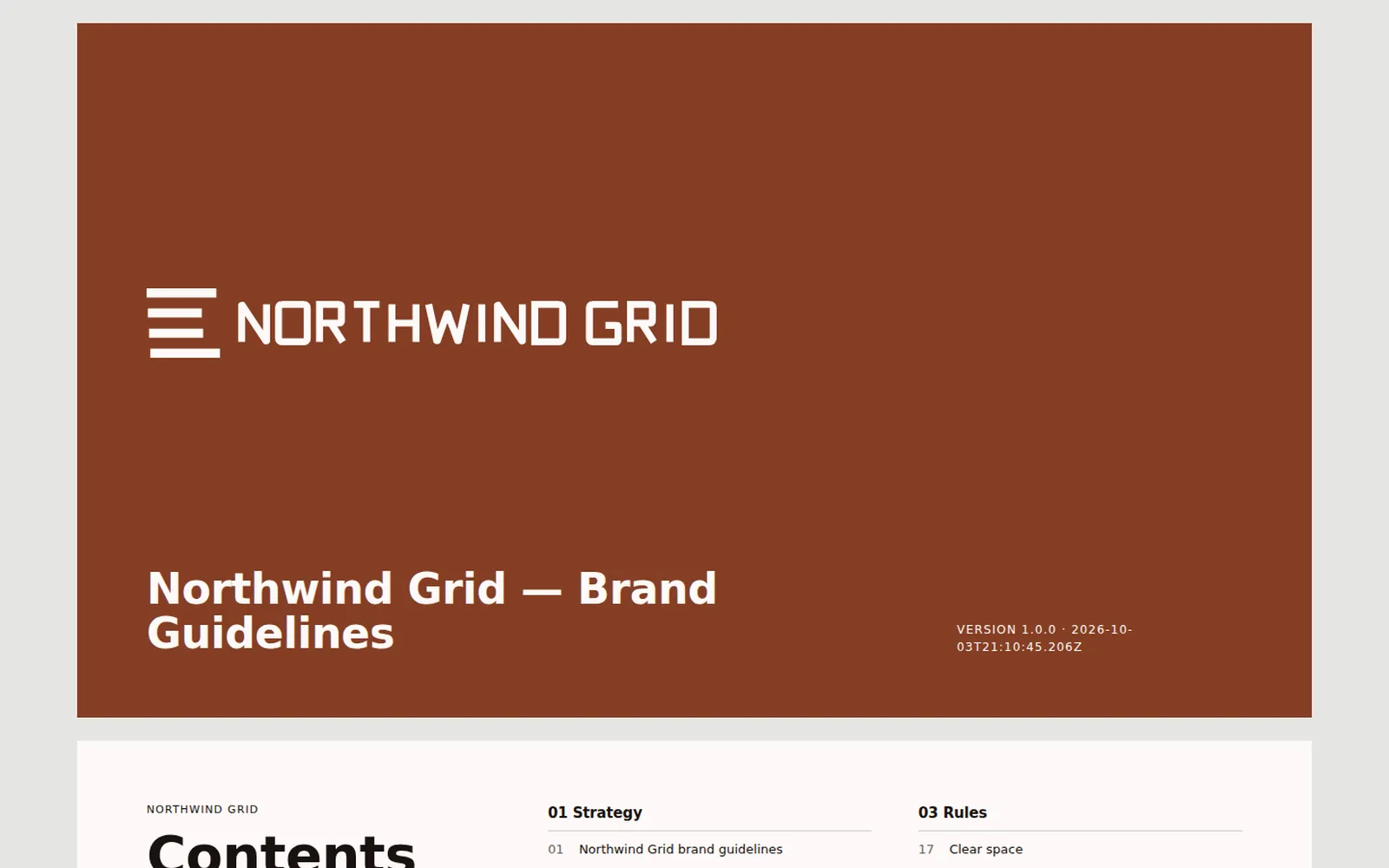
A zero-dependency TypeScript engine and CLI that turns a brand brief into a complete, reproducible package: strategy, logo system, colour, type, tokens, a brand book and applications. : Brand System Engine -
SVTPrivateAI
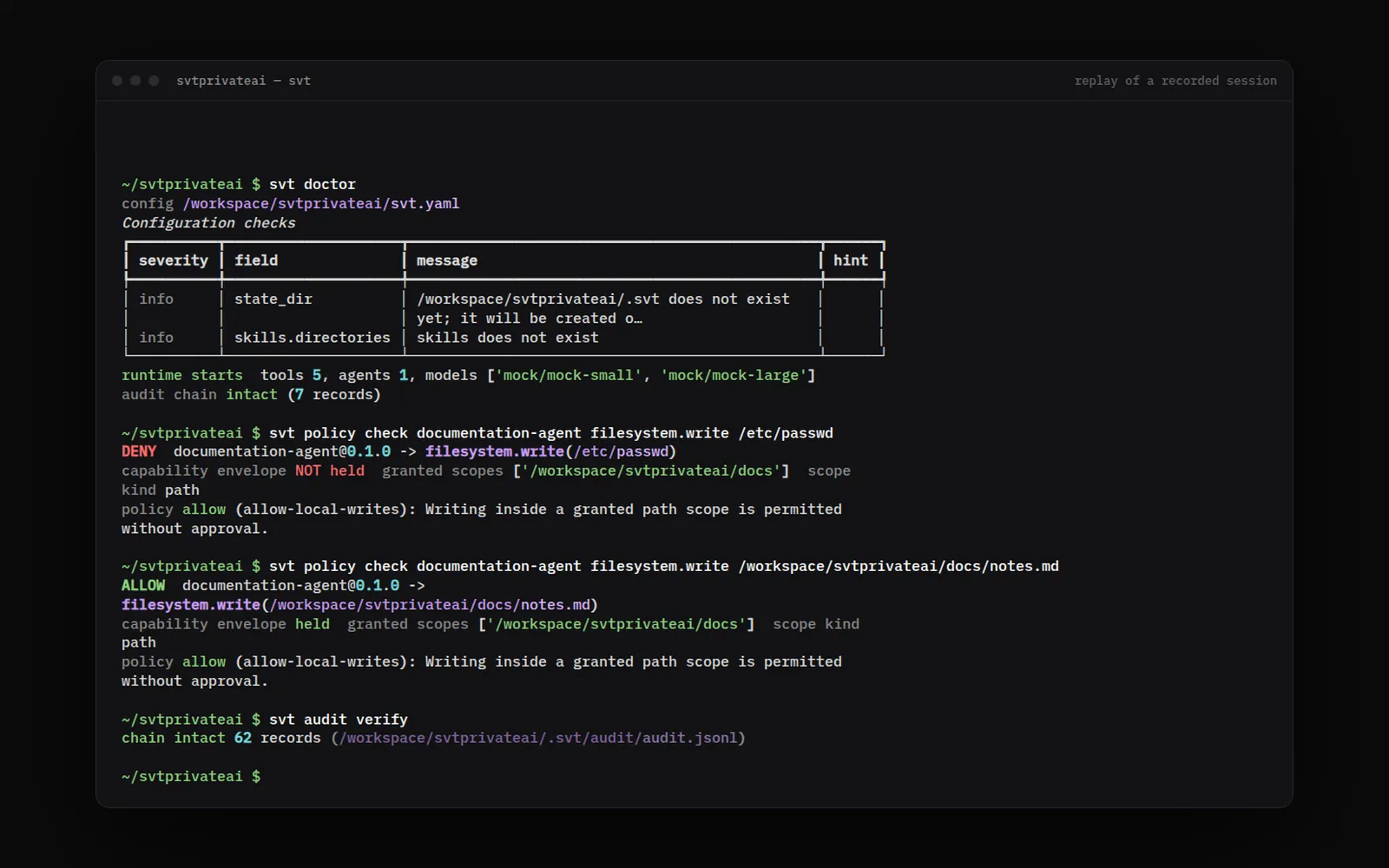
A local-first Python runtime that runs AI agents under scoped capabilities, a deterministic policy engine, human approvals and a hash-chained audit log. : SVTPrivateAI
Stack
Tools we reach for
- JavaScript
- TypeScript
- React
- Vite
- esbuild
- Playwright
- SVG
- Canvas 2D
- WebGL
How we build it Before each release the built pages are tested in a real browser: routes, forms, accessibility with axe-core, navigation flow and layout overflow. How this site is built
FAQ
Questions about this
Can you just design, or just build?
Yes, either. If we build from your designs, we’ll point out anything that will be slow, inaccessible or hard to maintain before it’s built, not after.
Which technologies do you use?
HTML and CSS first, then JavaScript or TypeScript, static generation where we can, and WebGL (Three.js or our own GLSL) and GSAP when real-time graphics or motion are worth their weight. Technology explains the choices.
Is accessibility included?
Yes, it’s part of every project. We work to WCAG 2.2 AA and test with automated checks, the keyboard and a screen reader.
What happens after launch?
We watch the first weeks closely, fix what comes up, then improve from what visitors actually do. Ongoing work can be a retainer or per request. Either way the code is documented, so another team could take over.
Is the frontend slowing you down?
Send a link and a sentence about what hurts. We’ll say where we would look first.